
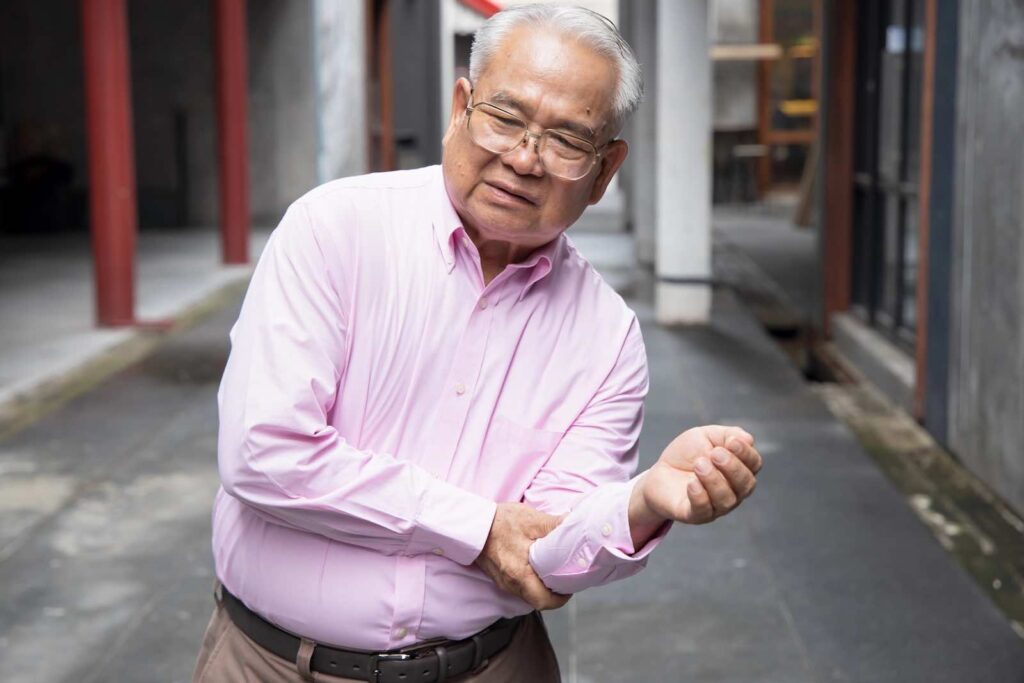
What really helps with golfer's elbow? The golfer's elbow (medical medial epicondylitis humeri ulnarisElbow flexion syndrome (ELS) is a persistent and painful overuse injury of the flexor tendons on the inside of the elbow. It doesn't only occur during golf, but also frequently due to repetitive hand movements in work or everyday life. The answer to the question... What really helps with golfer's elbow? lies in a consistent, multimodal and conservative approach, which inhibits inflammation and especially the long-term resilience restores the affected tendon-muscle unit. In our specialized hand therapy practice in Frankfurt We focus on evidence-based methods that aim to alleviate pain, correct the causes of overuse, and prevent re-inflammation through targeted training. We treat not only the symptom but also the underlying cause of the muscular imbalance.
The main pillars of conservative golfer's elbow treatment
Treating golfer's elbow is a gradual process that begins with rest in the acute phase and transitions to targeted training in the chronic phase. The keys to success are reducing the tensile stress at the tendon insertion and strengthening the muscles under eccentric load.
- Rest and relief: Immediate avoidance of all pain-inducing activities.
- Acute pain relief: Use of cold, anti-inflammatory ointments and bandages.
- Targeted training: Performing eccentric strengthening exercises and stretches.
- Ergonomic adjustment: Correction of incorrect postures at the workplace or during sporting activities.
Why eccentric training is the key to success
The eccentric training is considered the most effective method to address chronic complaints regarding the question What really helps with golfer's elbow? to provide lasting relief. In contrast to concentric strengthening, the muscle is activated under tension. This leads to a structural transformation of the tendon tissue, increases tensile strength, and improves blood circulation. In our therapy in Frankfurt We will show you precisely how to perform these exercises, which you must consistently continue at home to strengthen the tendon in the long term and make it less sensitive to overload.
Specialized therapy methods for treating golfer's elbow
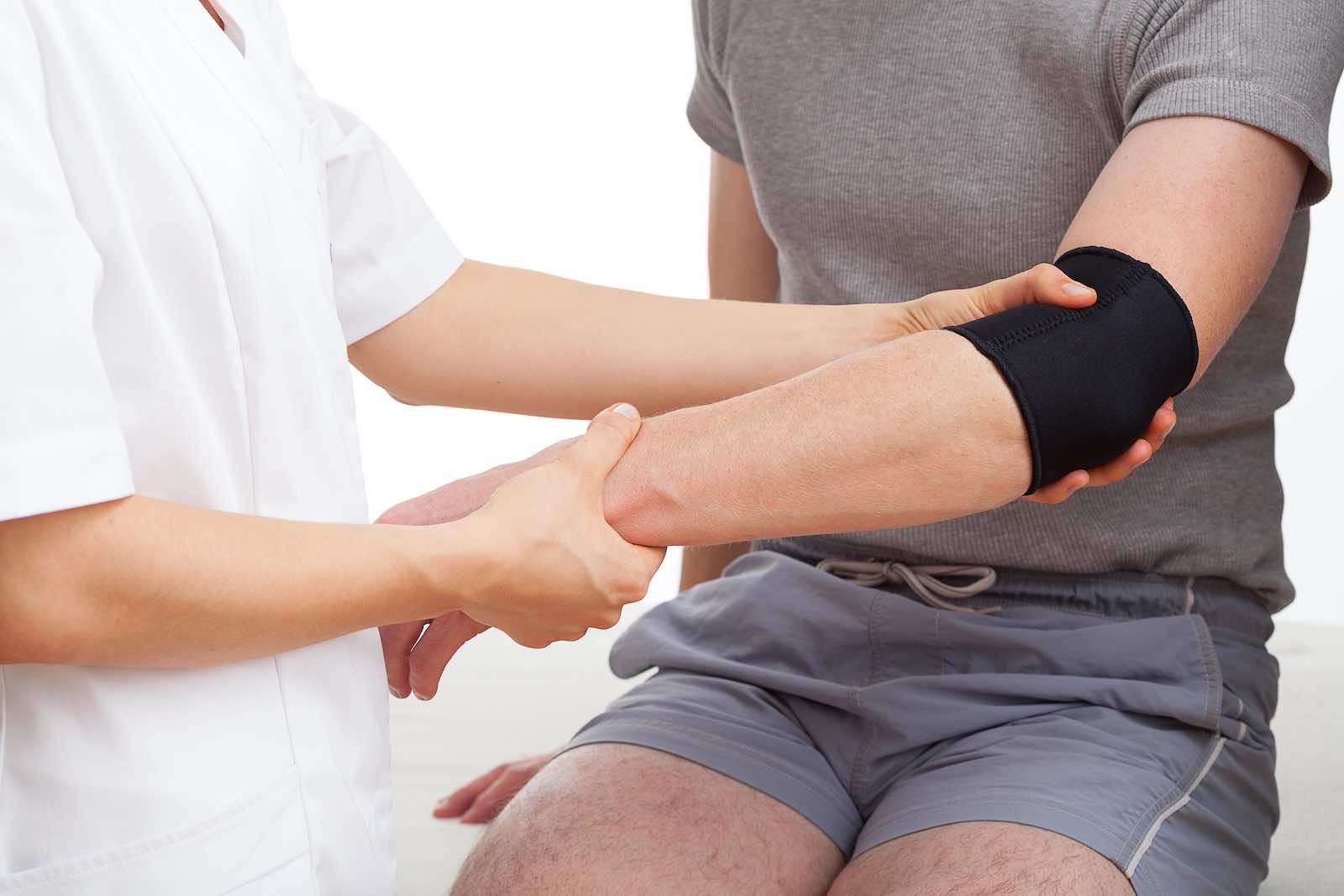
To answer the question What really helps with golfer's elbow? To specify this, we use a combination of manual techniques and functional training that directly affect the tendon and muscle structures.
Therapeutic method | Objective |
Manual Therapy | Relieving pain and tension |
Kinesiology taping | Relief of the tendon insertions |
Ergonomic consultation | Correcting the causes of overload |
Functional strength training | Long-term resilience |
Soft tissue treatment | Break down adhesions and hardening |
Ergonomic correction and everyday adaptation
Occupational therapy identifies the triggering factors of golfer's elbow, which often lie in repetitive patterns at the workplace. We analyze your workstation, your posture, and the tools you use. Correction can involve adapting the... Mouse guidance, the use of a ergonomic keyboard or include reducing gripping force during manual tasks. Without these adaptations, the tendon will be repeatedly irritated, rendering all other treatment efforts ineffective. What really helps with golfer's elbow? undermines.
Frequently Asked Questions about Golfer's Elbow (FAQ section)
1. What is the exact difference between golfer's elbow and tennis elbow?
The difference lies in the location of the tendon irritation. In the case of golfer's elbow are the tendon insertions of the flexor muscles of the wrist at the inside (medial) of the elbow is affected. tennis elbow (Excondylitis humeri radialis), on the other hand, involves the tendon insertions of the extensor muscles at the Outside (lateral) of the elbow is inflamed. However, the basic principles of treatment (rest, eccentricity) are similar.
2. How long does it take for the pain of golfer's elbow to really disappear?
The duration of the healing process in this case What really helps with golfer's elbow? is often frustrating and can six weeks to several months The extent of the injury depends heavily on how consistently you rest and perform the eccentric strengthening exercises. Tendon inflammation is chronic, which requires patience. Early, targeted occupational therapy is recommended. Frankfurt This speeds up the process.
3. Should I use cooling or heating for golfer's elbow?
In the acute, painful phase with signs of inflammation (swelling, warmth) cooling often better suited, as it reduces inflammation and dampens pain signals. In the chronic phase, if the pain is caused more by stiffness and tension, then Heat applications (e.g., red light) can be useful for loosening muscles and promoting blood circulation to support healing.
4. Are cortisone injections a long-term solution to the question of what really helps with golfer's elbow?
Cortisone injections can short term They can cause significant pain relief, but are considered not as a long-term solution In the treatment of golfer's elbow, studies show that cortisone can lead to even worse results than physiotherapy/occupational therapy alone after a few months, as it can weaken the tendon structure. The focus should be on functional rehabilitation.
5. What role does kinesiology taping play in the treatment of golfer's elbow?
Kinesiology taping can be used to provide support and relief. The elastic tapes are applied in such a way that they reduce tension in the wrist flexor muscles and relieve the tendon insertion. It offers mechanical support that can be helpful in everyday activities, but should not be used to treat the underlying condition. active therapy (Eccentricity) cannot be replaced.
6. Do I have to completely stop my sporting activities?
In the acute pain phase All sporting activities that trigger the pain (especially golf, tennis, weightlifting) should be avoided., completely discontinued or be significantly reduced. Once symptoms improve, you can gradually resume your sporting activities under guidance. We will advise you on Frankfurt for correct technique and equipment (e.g., grip size, racket selection).
7. What if the pain radiates into the forearm or hand despite therapy?
Radiating pain into the forearm or hand can indicate that not only the tendon insertion, but also Nerve structures (e.g., the ulnar nerve) are irritated or that Trigger points The problem lies in the muscles. Occupational therapy in this case includes specific components. Soft tissue techniques and Nerve gliding mobilizations to relieve the affected structures.
8. What aids can help to ease everyday life?
Aids that reduce the strain when gripping and carrying are very helpful in addressing the question What really helps with golfer's elbow? to answer questions in everyday life. This includes specific Epicondylitis braces, thick handles for tools or adapted kitchen helpers (e.g. jar openers) to minimize the necessary gripping force and relieve the painful tendons.
9. What happens if golfer's elbow becomes chronic and is left untreated?
If the golfer's elbow If not treated consistently, there is a risk of Chronicity. This means that the tendon tissue can change irreversibly and the pain can become chronic. This can lead to severe limitations in hand and arm function and the ability to work. Early, structured occupational therapy is crucial to prevent this.
10. What is the difference between manual therapy and soft tissue treatment in this condition?
The Manual Therapy focused on the joints (elbow joint and wrist) to optimize their mobility, while the Soft tissue treatment (e.g., trigger point therapy, cross-friction) specifically targeting the Muscles and the tendon insertions It works. Both techniques are used in combination to release tension and promote the healing of the overloaded structures of golfer's elbow.

 English
  German