Splints (orthoses) and functional taping are indispensable tools in hand therapy. They serve to relieve, stabilize, or position injured or overstressed structures for optimal healing. At our practice in Frankfurt, we offer comprehensive splint consultations – from selection to fitting – as well as the application of kinesiology taping to support hand function and quickly alleviate pain. These complementary measures are often crucial for successful therapy, whether following surgery or in cases of chronic conditions.
Consulting, adaptation and manufacturing of static and dynamic rails.
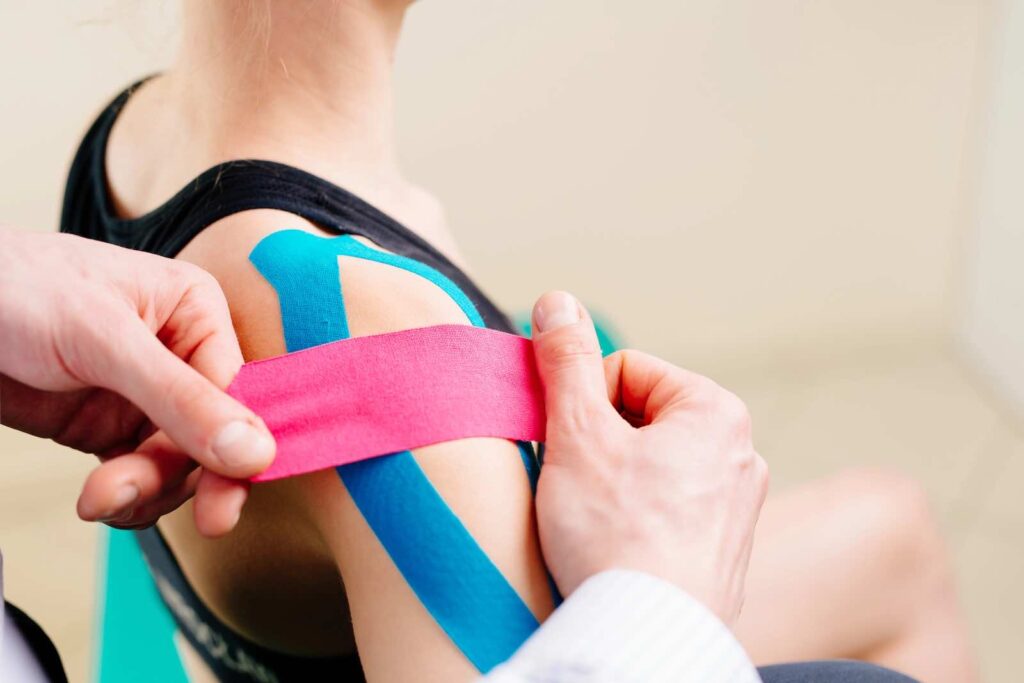
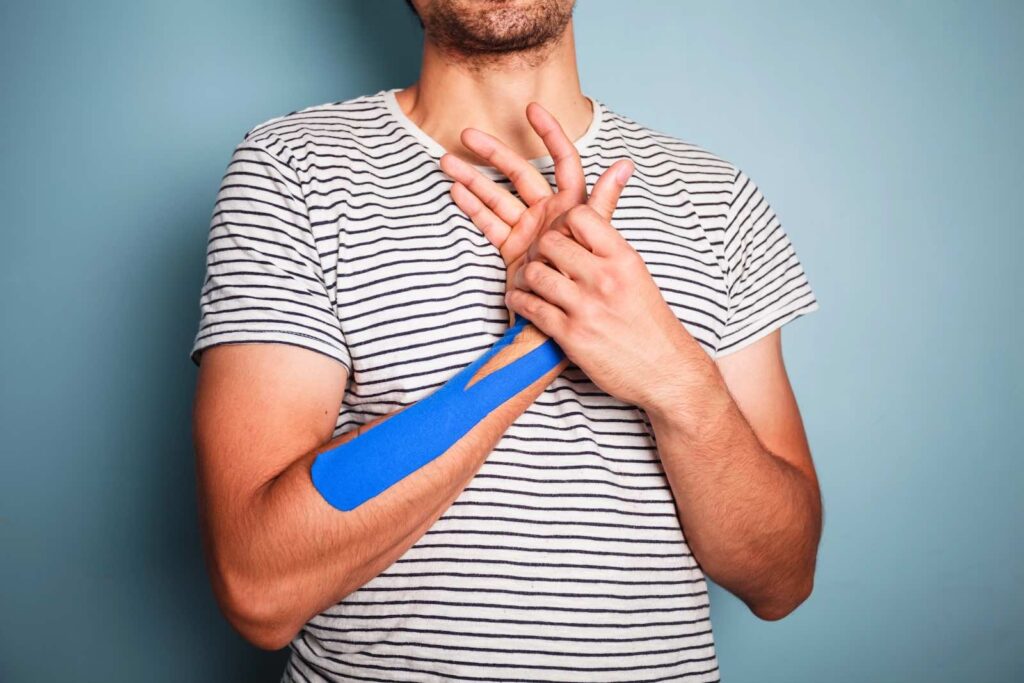
Application of kinesiology taping for relief and functional support.
Ensuring correct joint positioning during rest and activity phases.
Challenge and solution
Optimal support for your hand
After surgery or acute injuries, the hand often needs to be immobilized for a certain period of time. Static splints are used in these situations to ensure safe and precise positioning of the joints, thus preventing any risk to the healing of tendons or bones.
For overuse syndromes such as tennis elbow or tendonitis, kinesiology taping can provide immediate relief. The elastic tapes relieve pressure on the irritated tendons and support muscle function without severely restricting movement.
Choosing the right splint is crucial. At our practice in Frankfurt, we offer comprehensive advice on which material and design are best suited to your specific diagnosis (e.g., thumb base arthritis) and your daily life.
Sometimes dynamic rails are needed that allow movement within a specific area while simultaneously exerting tension on other structures. These complex rails are used to gradually increase mobility.
In addition to instruction on the use of the aids, we will provide you with detailed guidance on their handling and care. Correct use is essential for the splint or taping to achieve its full therapeutic effect.
We will guide you through the entire process of obtaining a splint. This includes deciding whether a prefabricated splint is sufficient or whether a custom-made thermoplastic splint (e.g., finger splints) is necessary for your case in Frankfurt.
In kinesiology taping, we specifically select the technique (relaxing, activating or stabilizing) to support the body's self-healing powers and positively influence pain transmission.
Individual fitting is key to the effectiveness of a splint. A good fit prevents pressure points, guarantees correct joint positioning, and ensures that the splint is accepted and worn regularly in everyday life.
We place great importance on providing detailed instructions for the use and care of the splint or tape. You need to know when and for how long to wear the aid to optimally support the healing process.
During rehabilitation, the splint may need to be adjusted, for example, if the swelling subsides or a new range of motion is desired. We regularly check the fit and function of the splint.
Added value and outlook
The right support for your hand in Frankfurt
The therapeutic use of splints and taping is a specialized field within occupational therapy. My additional qualifications in static splint fabrication and my extensive experience in taping allow me to offer you a particularly high level of expertise in this area. These complementary measures ensure that your hand is protected during periods of rest and receives the necessary support during activity. This is the crucial difference for a rapid and, above all, safe restoration of hand function after injuries or in cases of chronic joint diseases.
Kinesiology taping can be worn for several days, depending on the material and indication. We will advise you individually on how long the tape can retain its supportive effect.
This depends on your diagnosis. Post-operatively, wearing the brace almost all day is often necessary. In the case of osteoarthritis, the brace is usually only recommended at night or during strenuous activities.
Thermoplastic splints can get wet, but should be dried thoroughly. We provide you with detailed care instructions to avoid skin irritation and ensure hygiene.



 German
  English