

What should I avoid doing if I have carpal tunnel syndrome? Carpal tunnel syndrome (CTS) requires actively avoiding strain and incorrect posture to protect the irritated median nerve and allow for regeneration. The most important component of conservative therapy is... consistent relief. Any activity or position that increases pressure in the carpal tunnel or causes additional irritation of the nerve must be reduced or completely avoided. The following strict restrictions are essential to prevent a worsening of symptoms (nighttime tingling, numbness, pain) and to avoid surgery.
1. What should I avoid doing if I have carpal tunnel syndrome? Avoid extreme postures.
The greatest danger to the median nerve comes from extreme joint positions, as these maximally constrict the bony carpal tunnel.
Avoidance of flexion and extension
- Strong flexion: Bending the wrist towards the palm side presses the carpal ligament on the nerve, leading to an acute increase in pressure in the tunnel.
- Strong extension: Overextending the wrist (towards the back of the hand) stretches the tendons and surrounding tissue, thereby also narrowing the nerve space.
- Static postural abnormality: Prolonged exposure to any of these extreme positions, such as holding a phone or leaning on something, should be avoided at all costs.
Unconscious nocturnal compression
The most common „prohibition“ concerns sleep, as this is when the most harmful postures are unconsciously adopted.
- Sleeping on your hand: Avoid lying on your hand or wrist, and refrain from bending your wrist under your head or pillow. This compression is the main cause of the typical nighttime tingling attacks.
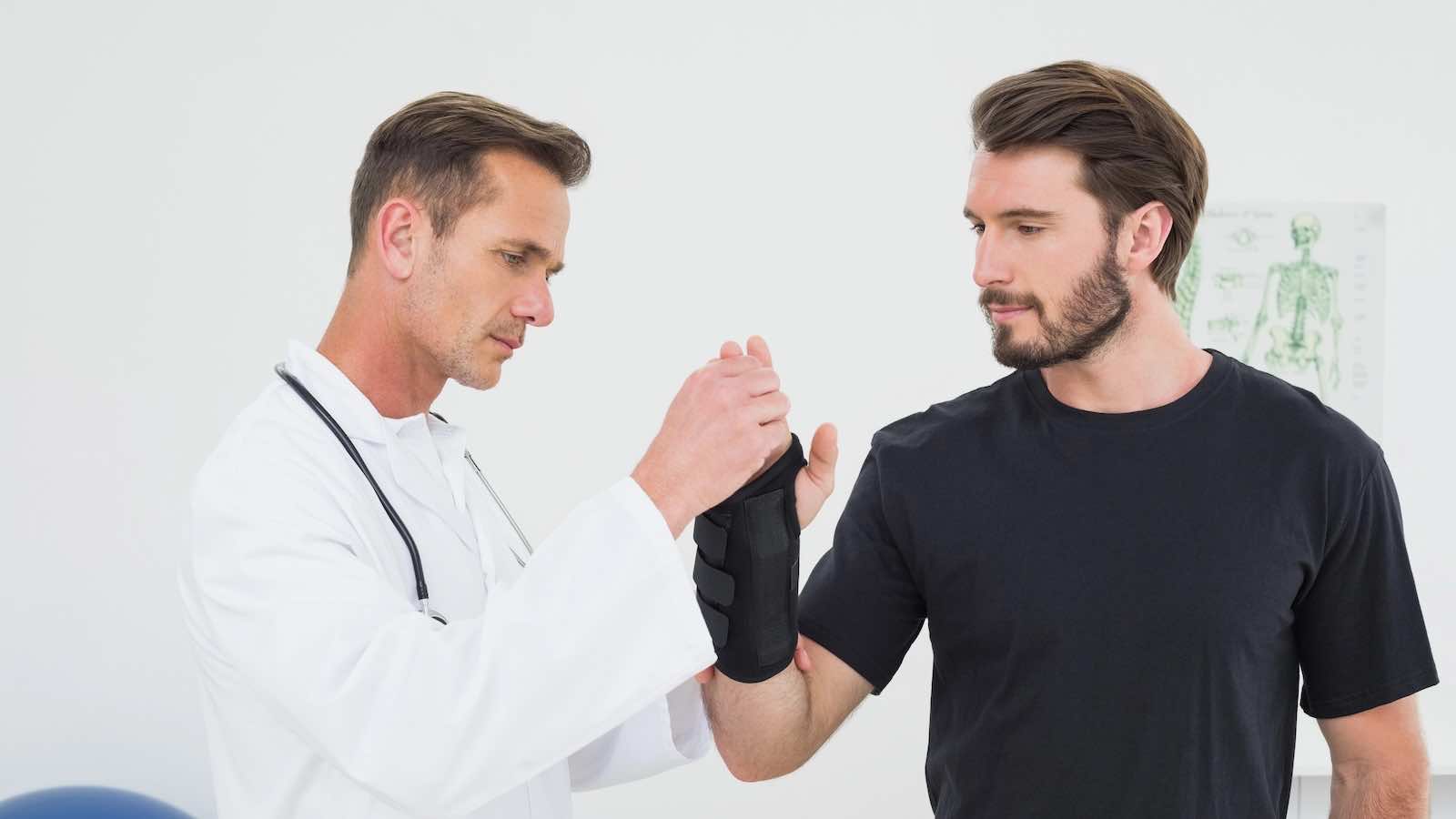
- Solution: Wear a consistent Night splint (orthosis), which fixes the wrist in the relieving neutral position.
2. Restrictions in work and leisure: Repetition and vibration
Repeated, strenuous movements (repetition) and vibrations lead to swelling of the tendon sheaths, which increases the pressure on the median nerve.
Avoidance of stress factors
- Vibrating tools: Working with vibrating tools such as drills, jigsaws, or lawnmowers should be greatly reduced or avoided altogether. The vibration is transmitted directly to the nerve and irritates it.
- Powerful and repetitive gripping movements: All activities requiring a combination of strong gripping and repetition, such as wringing out cloths, prolonged crocheting or knitting, or intensive work with manual tools, are prohibited.
- Incorrect computer ergonomics: Prolonged use of the mouse or keyboard without resting the wrist in a neutral position is harmful. Ensure that your wrist is not resting on the edge of the desk, as this puts downward pressure on the carpal tunnel.
3. What should I not do if I have carpal tunnel syndrome? Incorrect thermal treatment
Applying heat to acute carpal tunnel syndrome symptoms can be counterproductive.
- Do not use heat in cases of acute inflammation: In contrast to chronic joint pain, acute symptoms of carpal tunnel syndrome should be treated with a different approach. no heat Heat can be applied. Heat promotes blood circulation, which can increase swelling (edema) in the narrow tunnel and thus increase pressure on the nerve.
- Focus on cooling: Instead of heat, you should use [unclear] to relieve acute pain and swelling. targeted cooling (apply for a maximum of 10-15 minutes, wrapped in a cloth).
4. Taboo: Ignoring symptoms and self-experimentation
The symptoms of carpal tunnel syndrome are warning signs that indicate damage to the nerve.
- Ignoring deafness: If numbness (hypesthesia) persists or worsens in the area supplied by the nerve, this is a sign of progressive nerve damage. Ignoring these symptoms can lead to... irreversible motor and sensory damage lead.
- Uncontrolled stretching or massaging: Strong massages or aggressive stretching exercises of the wrist without therapeutic guidance can further irritate the already irritated median nerve or the inflamed tendon sheaths.
- Discontinuation of splint therapy: Removing the splint on your own as soon as the acute symptoms subside is a common mistake and almost always leads to a relapse, as the nerve needs time to fully regenerate.
Activities and attitudes that must be avoided | Alternatives and relief strategies |
Strong bending/stretching of the wrist (e.g. when sleeping without a splint). | Night rail Wear it and keep your hand in a neutral position. |
Holding for a long time of objects (e.g. telephone, book). | Regular Breaks Insert and shake out your hands. |
Vibrating work (e.g. heavy tools). | Delegating tasks or using tools Vibration damping use. |
Leaning of the wrist on hard edges. | wrist Store freely or use soft, ergonomic surfaces. |
Excessive heat in case of acute pain. | In case of swelling and pain cooling compresses use. |
Frequently asked questions about the limitations of carpal tunnel syndrome
1. What should I avoid doing if I have carpal tunnel syndrome while working on a computer?
When working at a computer, you should not rest your wrists on hard edges or bend your hand sharply upwards or downwards. The wrist must always be kept in a natural position. even (neutral) They should be kept at a distance. You should also avoid using the mouse or keyboard continuously for hours on end. Instead, take regular breaks. Micro-breaks and use ergonomic aids to avoid pressure on the carpal tunnel.
2. Am I allowed to do sports if I suffer from carpal tunnel syndrome?
You are allowed to exercise, but you should avoid sports that place a heavy strain on the wrist or require high, repetitive grip strength. These include intensive climbing, weightlifting, or rowing. Light sporting activities that are easy on the wrist (e.g., running, cycling with a relaxed grip) are usually safe. If in doubt, what I must not do if I have carpal tunnel syndrome Regarding sports, consult your doctor or therapist.
3. What am I not allowed to do regarding housework if I have carpal tunnel syndrome?
When doing housework, you should avoid activities that strongly bend or twist your wrist, especially when combined with force. This includes wringing or squeezing cleaning cloths. Carrying heavy bags should also be minimized. Try to distribute the strain between both hands and use tools that allow for a neutral hand position.
4. Should I keep my hand still or move it if I have carpal tunnel syndrome?
You shouldn't keep your hand completely still, as this can lead to stiffness, but you must avoid extreme and strenuous movements. It's important to protect your fingers and hand. to move gently (e.g., shaking, gentle circular movements) to promote blood circulation and prevent stiffness. The therapist will show you the targeted techniques. Neurodynamic exercises, which you absolutely should do.
5. Am I allowed to carry heavy objects if I have carpal tunnel syndrome?
No, you should avoid carrying heavy objects. The strain from the weight leads to tension in the flexor tendons and muscles, which greatly increases pressure on the median nerve and can worsen symptoms. If you must carry something, distribute the load evenly and try to bend your wrists as little as possible.
6. What should I avoid eating or drinking if I have carpal tunnel syndrome?
There are no strict dietary restrictions for carpal tunnel syndrome. However, it is advisable to reduce pro-inflammatory foods (e.g., excessive sugar, red meat). The focus should be on a balanced, anti-inflammatory diet (rich in omega-3 fatty acids, fruits, and vegetables). This can lower the overall level of inflammation in the body and support regeneration.
7. What should I not do if I have carpal tunnel syndrome and am wearing a night splint?
When wearing a night splint, you should avoid actively bending or straightening your wrist, as the splint is designed to prevent this. Also, do not attempt to lift heavy objects, as the splint only stabilizes the wrist and is not designed to withstand significant stress. The splint is primarily a Rest and relief tool.
8. What happens if I don't follow the restrictions?
If you do not adhere to the restrictions and continue the harmful strains, carpal tunnel syndrome will most likely develop. worsen. The increased compression leads to more severe and persistent symptoms, faster damage to the median nerve, and ultimately to the urgent need for surgery. operation, to prevent irreversible damage.
9. Can I continue to use my mobile phone intensively if I have carpal tunnel syndrome?
Intensive smartphone use should be minimized. Holding a phone for extended periods often requires an unnatural, static bend in the wrist and repeated thumb action. This can irritate the median nerve. Try using both hands to operate your phone or rest it on a support to keep your wrist straight.
10. What should I avoid doing if I have carpal tunnel syndrome so as not to jeopardize the healing process?
To avoid jeopardizing the healing process, you must not... Therapy recommendations Ignore splinting and exercises and don't return to full activity too soon. Listen to your body's signals. Any activity that triggers numbness or tingling is a warning sign and should be stopped immediately to avoid interrupting the healing process.

 English
  German