
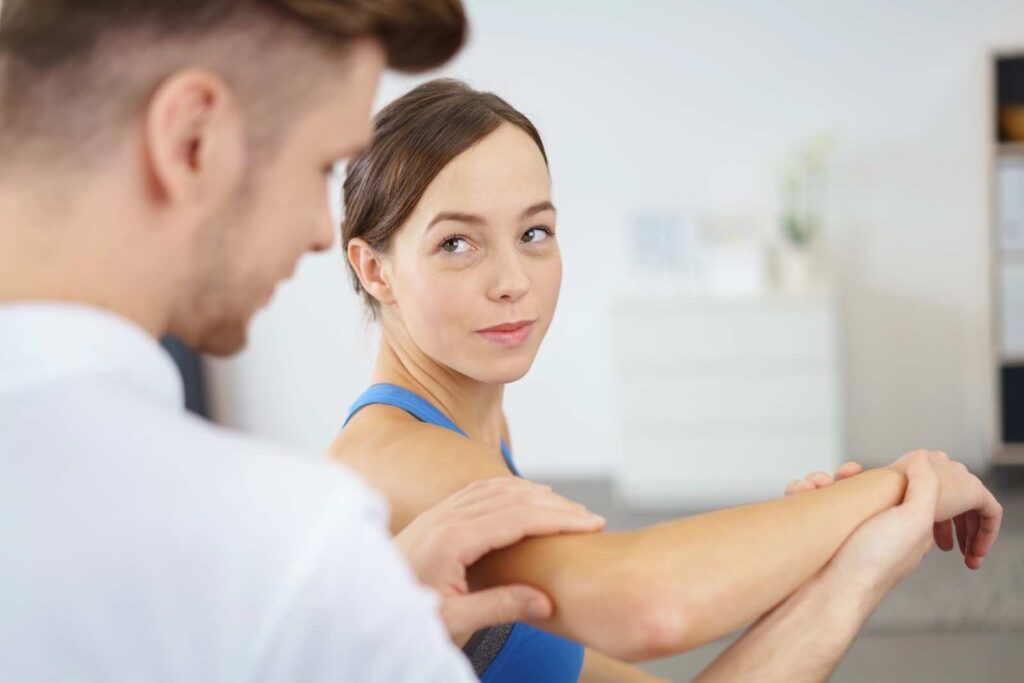
The duration of a Tissue hardening after surgery is highly variable and depends heavily on the type of surgery, individual wound healing, the location of the scar, and postoperative care.
Basically, there are two phases:
- The early/normal hardening (inflammatory and proliferative phase):
- Time: The hardening begins as soon as the new Collagen tissue to stabilize the wound, usually within the first 3 to 6 weeks after the operation.
- Duration: This initial hardening is a normal part of the healing process (scar maturation) and can subside over time. several months persist. During this time (up to 6 months), the scar is often still red and raised.
- Long-term hardening (maturation phase and pathological scarring):
- Duration: The complete maturation of a scar can take up to 12 to 18 months This takes time. During this period, the initially unstructured collagen is remodeled, which makes the scar softer and paler.
- Problem: If the hardening persists after 6 months persists, pronounced is, hurts or themselves bulging If it extends beyond the original wound boundary (hypertrophic scar or keloid), a pathological scarring or an internal Adhesive (Adhesion) occurs. These hardenings can Years persist and require targeted occupational therapy treatment (scar management).
Important factors influencing the duration of tissue hardening
Several factors determine how long the tissue hardening lasts and how pronounced it becomes:
- Localization: Scars over joints or in areas with high skin tension (e.g., shoulder, sternum) tend to harden more strongly and for a longer period of time.
- Wound healing process: Complications such as infections, hematomas (bruises) or serous fluid collections (seromas) in the wound area can prolong the inflammatory phase and lead to excessive formation of connective tissue.
- Type of procedure: In operations that affect deeper tissue layers (tendons, fascia) – as is often the case in the Hand therapy In this case, internal adhesions can form, which can lead to permanent restriction of movement and hardening if they are not treated early.
- Genetic predisposition: Some people are naturally prone to developing raised, hardened scars (keloids).
The role of occupational therapy in tissue hardening
Especially in the field of hand therapy, the treatment of scar tissue hardening is crucial for restoring function. Occupational therapy should address this. as soon as possible Begin after wound closure:
|
Occupational therapy measure |
Goal in case of hardening |
|
Scar friction techniques |
To break down adhesions between skin and deeper tissue |
|
Compression therapy |
Apply continuous pressure to the scar to regulate collagen production. |
|
silicone gels/sheets |
Create a moist environment, which makes the scar softer and more elastic. |
|
Targeted mobilization |
Maintain the gliding ability of the tendons under the scar. |
Important: If the hardening is accompanied by severe pain, fever, redness or an unpleasant odor, please consult your doctor or surgeon immediately, as this may indicate an infection or other complications.
Would you like to know which specific scar treatment techniques are relevant for Leonie Kruse's hand therapy practice in Frankfurt?

 English
  German