
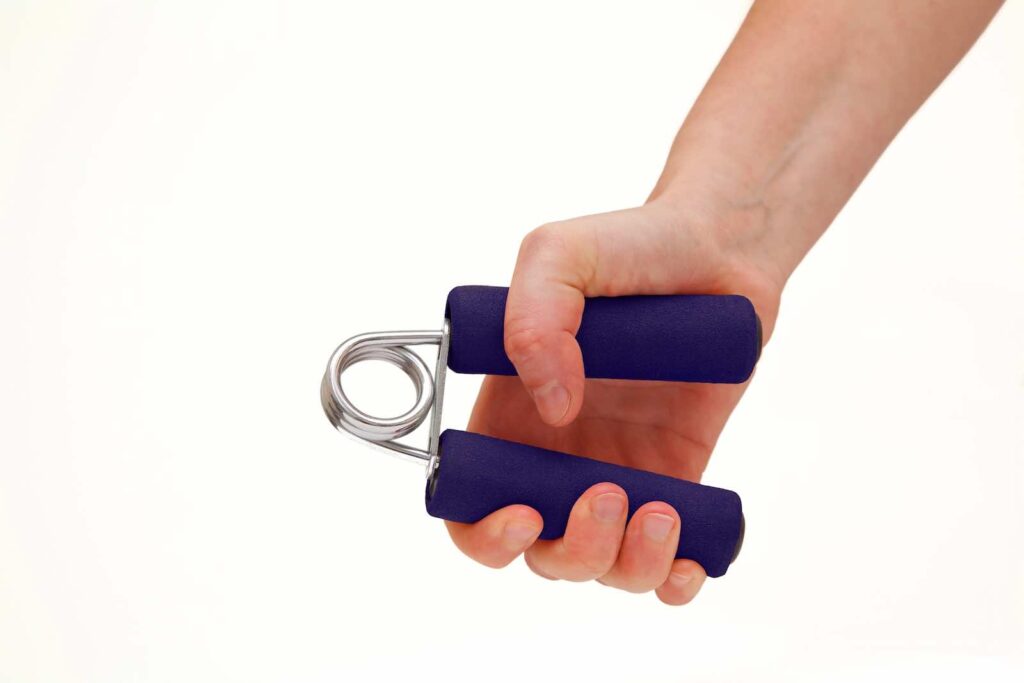
Do you need arm strength to play golf? The answer to the question Do you need arm strength when playing golf? Yes, it is, but it's secondary. The true source of power in the golf swing lies not in the arms, but in the hull (Core), in the legs and in the rotational stability of the shoulder. Excessive use of the Arm strength when playing golf is even counterproductive and in most cases leads to Overload syndromes like golfer's elbow (medial epicondylitis humeri ulnaris) or tennis elbow. Ideally, the arms act as "transmission organs," transferring the body's enormous rotational energy to the racket head. In our hand therapy practice in Frankfurt We analyze dysfunctional movement patterns resulting from excessive arm use and develop targeted therapeutic approaches to improve stability and technique.
The biomechanics of the golf swing and the true sources of power
The golf swing is a chain of movements that sequentially builds power. The arm is only the final link in this chain.
- Primary power source: Hip rotation and trunk stability (core muscles).
- Transmission element: Shoulder and chest muscles as well as arm muscles.
- Control element: Hand and wrist for precision and clubface at the moment of impact.
The dangers of too much arm strength in golf
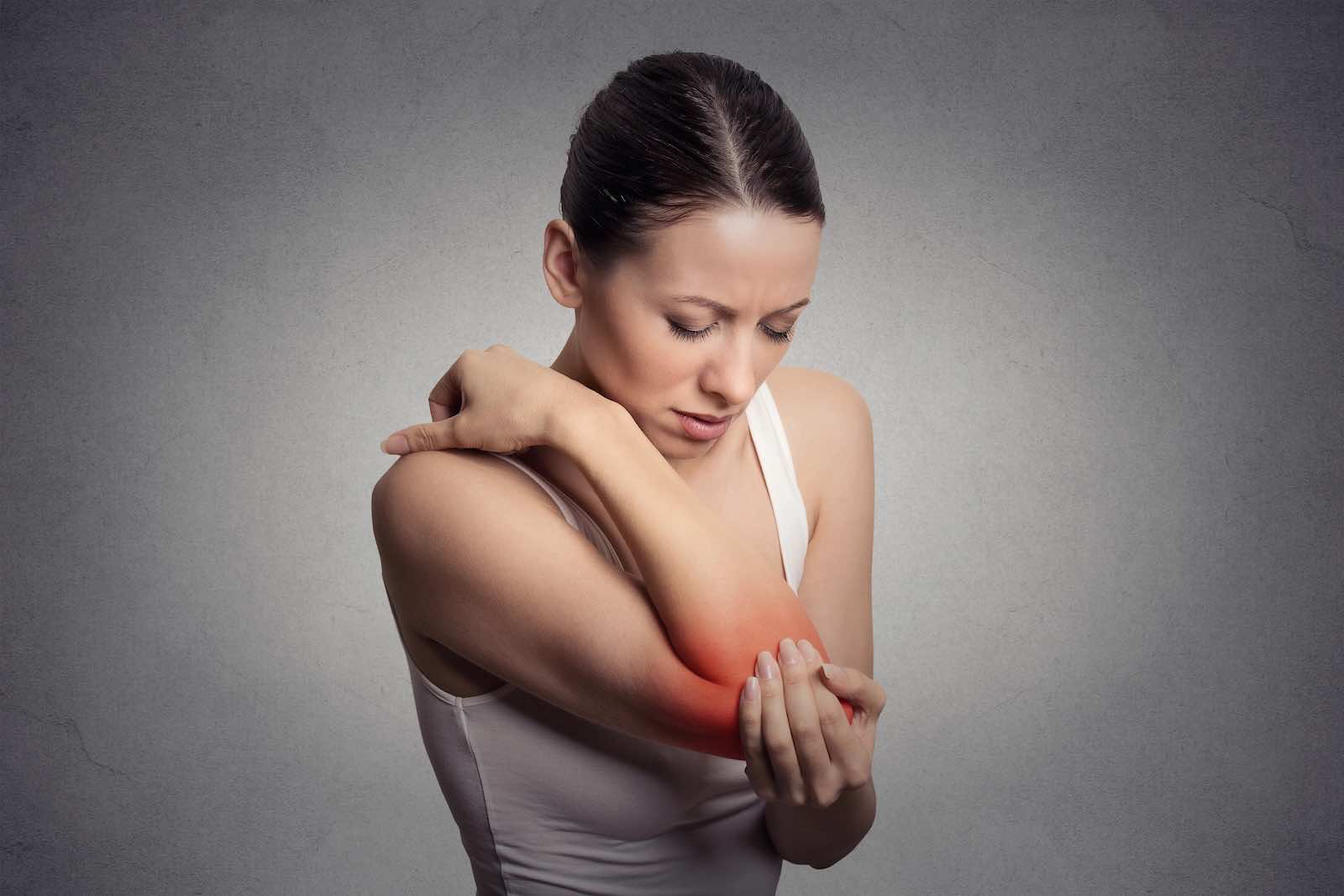
When players try to answer the question Do you need arm strength when playing golf? Responding to this with excessive use of the arm muscles leads to two main problems: Injuries and Inconsistency. An improper swing motion originating from the arms stresses the tendon attachments at the elbow and wrist and is the most common cause of tendon injuries. Furthermore, the striking surface is not consistently struck, resulting in an inaccurate and weak ball flight. The goal of our therapy in Frankfurt is to teach the patients, less arm strength and more core strength to use.
Therapeutic measures to strengthen the muscles relevant to golf
Hand therapy and occupational therapy support golfers not only in treating overuse injuries, but also preventively by optimizing movement patterns. The answer to Do you need arm strength when playing golf? It lies in a balance between stability and explosive power transmission.
Therapeutic method | Objective |
Core stabilization training | Generation of primary swing velocity |
Scapular stability | Prevention of shoulder and elbow problems |
Wrist mobilization | Control of the striking surface and precision at the moment of impact |
Eccentric forearm training | Reducing the risk of golfer's elbow/tennis elbow |
Ergonomic grip analysis | Optimizing the grip to relieve hand muscles |
The importance of wrist stability and grip
Although the rotational force originates from the hull, the Wrist stability crucial for transferring this power to the racket. If the wrist is unstable at impact (e.g., due to excessive activity) Arm strength when playing golf), it buckles, and energy is lost. Our therapy in Frankfurt includes targeted exercises to strengthen the forearm stabilizing muscles, to ensure a stable wrist at impact. We also analyze the Handle (too tight or too loose), which directly affects the stress on the tendons.
Frequently Asked Questions about Arm Strength and Golf Injuries (FAQ Section)
1. What role does arm strength really play in golf?
The Arm strength when playing golf plays a subordinate role. It is necessary to hold the club and accelerate it at impact. However, the main energy for the swing should come from the Torso rotation come. Trying to hit the ball only with your arms leads to tension and increases the risk of injury.
2. Can excessive arm strength cause golfer's elbow?
Yes, a Excessive use of arm strength when playing golf This is the main cause of golfer's elbow. Attempting to accelerate too quickly or too hard with the forearm muscles overloads the flexor tendons at the elbow, as these are not designed for the primary generation of explosive golf swing power.
3. What is more important: arm strength or flexibility in the golf swing?
Flexibility and stability are significantly more important than pure arm strength. Flexibility in the thoracic spine and hips enables a full swing, while core stability and strong but relaxed forearm muscles ensure efficient and injury-free power transfer.
4. Should golfers do strength training for their arms?
Golfers should prepare for functional training Focus on strengthening the entire kinematic chain, not just isolating the arms. The training should... Core muscles and the rotational stability of the shoulder Focus on this. Light eccentric training of the forearms is beneficial for injury prevention.
5. How can I use more core strength instead of arm strength in my golf swing?
To utilize more core strength, the Relaxed back and shoulder area remain. The momentum is maintained by the Hip rotation initiated. In our practice in Frankfurt We will show you exercises that train this feeling of rotation and passivity of the arms during the swing.
6. How does the grip affect the arm strength required when playing golf?
A Grip too tight is a sign of too much Arm strength when playing golf and leads to premature fatigue of the forearm muscles. This increases the risk of tendon damage. A loose but controlled grip allows for better release of core energy.
7. Does excessive arm strength also cause tennis elbow in golfers?
Yes, too much Arm strength when playing golf It can also cause tennis elbow. This happens when the golfer tries to swing the club with excessive contraction of the palm. wrist extensor muscles to stabilize or accelerate.
8. Are there specific therapeutic exercises to make the arms more passive?
Yes, in hand therapy we use Proprioception and coordination exercises which aim to improve arm control without using excessive force. The focus is on the Movement quality instead of focusing on strength.
9. What happens to the striking distance if I only use my torso strength?
If you efficiently generate energy from your torso and legs, your Range is more consistent and generally greater., This is because the speed of the clubhead is maximized at impact. Pure arm strength quickly leads to fatigue and thus a reduction in driving distance.
10. What role do the hands and fingers play in the golf swing?
The hands and fingers are for the Control of the striking surface and the precision They are responsible for the final point of contact with the club and must be relaxed enough at impact to transmit the force, but stable enough not to twist the clubface.

 English
  German