
How do you train your hand muscles? The Hand muscles Training is essential for the restoration and maintenance of Fine motor skills, grip strength and dexterity. The hand consists of a complex arrangement of intrinsic (located within the hand) and extrinsic (originating from the forearm) muscles. Targeted training of the Hand muscles Occupational therapy aims to build functional strength, improve coordination, and prevent or treat overuse syndromes such as carpal tunnel syndrome or tendonitis. In our hand therapy practice in Frankfurt We develop individual training plans that are precisely tailored to your needs, whether for rehabilitation after an injury or for optimizing performance in work or sports.
The functional components of the hand muscles
To understand effectively, how to train your hand muscles, One must understand their main functions. Training must cover all these areas to ensure functional balance.
- Grip strength: The ability to hold objects firmly (e.g., power grip).
- Fine motor skills: The precise coordination of thumb and fingers (e.g. turning a key, writing).
- Endurance: The ability to maintain strength over a longer period of time.
Specificity of hand training: Intrinsic versus extrinsic muscles
The extrinsic musculature The flexors and extensors in the forearm provide the main force for gripping. intrinsic musculature (Muscles in the palm) are responsible for fine-tuning, spreading and bringing the fingers together, and the opposition movement of the thumb. A holistic training of the Hand muscles Both groups must be addressed equally, as an imbalance can quickly lead to pain.

Effective exercises for training the hand muscles
Hand therapy uses various aids and techniques to provide targeted and dosed stimuli for training the hand. Hand muscles to set.
function | Exercise/Method | Objective |
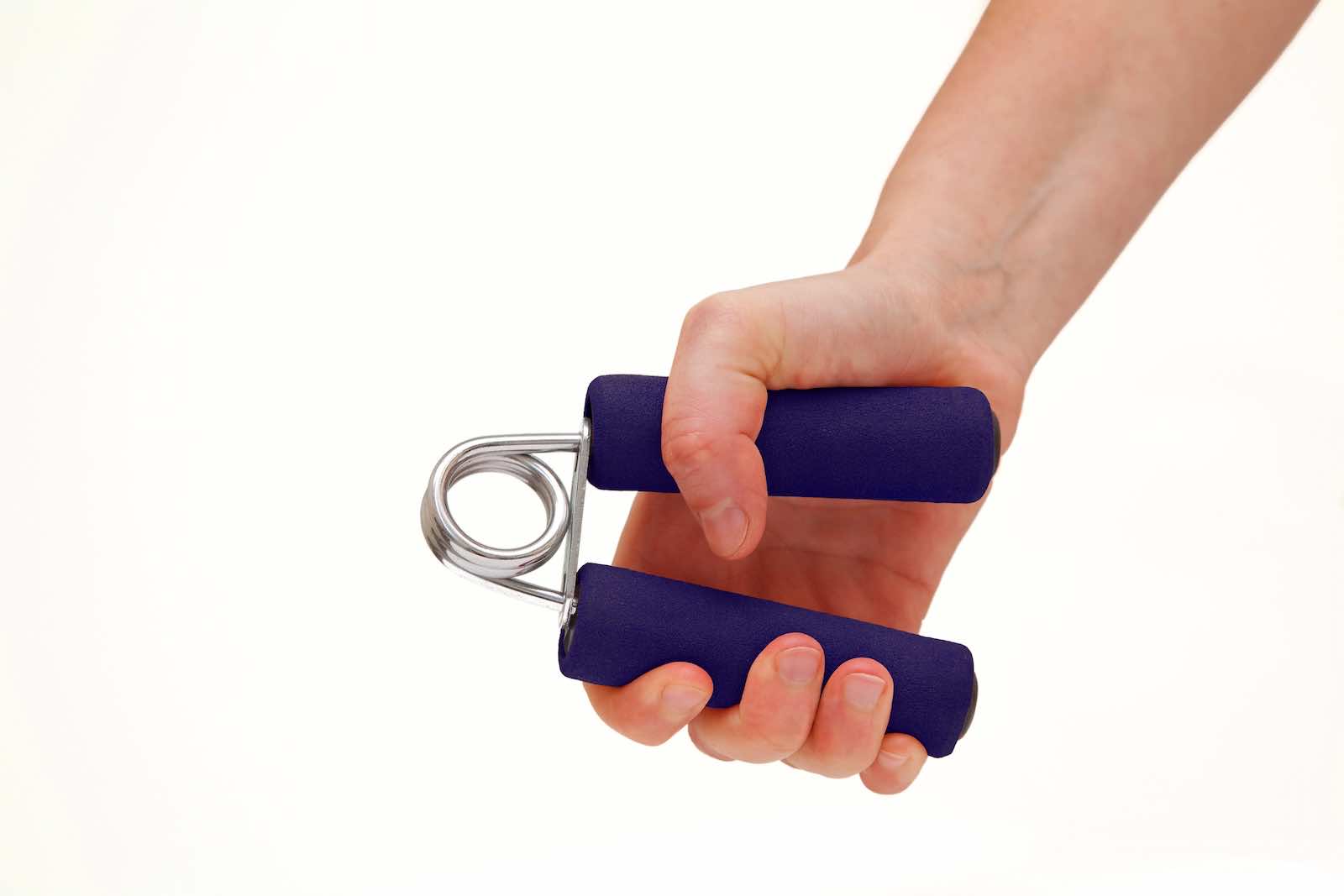
Grip strength (closing force) | Kneading therapy putty or gripping a hand trainer | Increased holding and pulling force |
Fine motor skills/Intrinsic motivation | Exercises with pens, coins, or pegboard sets | Improvement of coordination and dexterity |
Extension force (antagonists) | Use of finger expanders or rubber bands | Balance for the gripping muscles and prevention of tendonitis |
Pinch force (pointed grip) | Squeezing small balls or putty together between thumb and fingertips | Strengthening for precise holding functions |
Endurance | Repeated, light grasping over a longer period of time | Increased muscle fatigue resistance |
Training with therapy putty and finger expanders
The Therapy putty is an ideal medium to Hand muscles It's ideal for training because it offers controlled, variable resistance. By kneading, squeezing, or rolling it out, all muscle groups (flexors, extensors, thumb muscles) can be trained in isolation. Finger expander Rubber bands (which are pulled over the fingers) are essential to address the often neglected extensor muscles to strengthen and thus create a muscular balance to the strong gripper.
Frequently Asked Questions about Hand Muscle Training (FAQ section)
1. How often and for how long should I train my hand muscles?
The training of Hand muscles should usually several times a day (e.g. 2-3 times) in short units of 5 to 10 minutes This should be done. The muscles of the hand tire quickly. More important than the duration is the consequence. A daily, light workout is more effective than one long session per week.
2. Can I train my hand muscles without special equipment?
Yes. You can Hand muscles Excellent exercises without equipment: Firmly squeeze your fingertips and thumb together (pinch strength), spread your fingers as far as possible against themselves (intrinsic muscles), or firmly grasp a crumpled ball of paper (grip strength). Everyday objects like a sponge or a towel are also suitable.
3. What is the difference between strength training and fine motor skills training?
The Strength training the Hand muscles It aims at maximum strength (e.g., firmly gripping a medicine ball). Fine motor skills training aims at the coordination and precision of the intrinsic hand muscles (e.g., picking up a paperclip). A balanced training program must include both components.
4. Does training the hand muscles help against carpal tunnel syndrome?
Targeted training of Hand muscles It can contribute to prevention and alleviate symptoms by improving stability and reducing muscular imbalances. However, in cases of acute symptoms or advanced carpal tunnel syndrome, the Relief (via splinting) and nerve mobilization are the primary focus. Strengthening exercises must then be carefully dosed.
5. Can too much training of the hand muscles be harmful?
Yes. Like any muscle, the Hand muscles Overtraining can occur. Increasing resistance or repetitions too quickly can lead to... Tendonitis This can lead to pain, especially in the wrist or fingers. Pay attention to your pain threshold and consult our practice if the pain persists. Frankfurt.
6. How can I train my hand muscles for playing music (e.g., piano)?
For musicians, the Independence of the fingers, the suppleness and the Endurance The focus is on training that isolates and promotes intrinsic muscle function (finger spreading, opposition exercises) and the coordination of individual fingers, often with little or no resistance.
7. What is the opposition movement and why is its training important?
The opposition movement The opposing of the thumb to the other fingers is essential for a precision grip. Training this movement strengthens the thenar muscles and is crucial for fine manipulations such as opening bottles or grasping small objects.
8. What role do forearm exercises play in training the hand muscles?
The extrinsic musculature The forearm is the power center of the hand. The tendons of these muscles control finger movements. Therefore, strengthening the forearm flexors and extensors (e.g., with light dumbbells or a therapy bar) is fundamental to improving overall function and grip strength.
9. How can I train my hand muscles if I have osteoarthritis?
In osteoarthritis, the focus is on Joint protection and maintaining mobility. The training of Hand muscles should pain-free and should be performed with low resistance to avoid overloading the joints. Functional exercises such as shaping putty are often more suitable than lifting heavy weights.
10. Where in Frankfurt can I get an individual training plan for my hand muscles?
In our hand therapy practice in Frankfurt Following a detailed assessment (measurement of grip and pinch strength), we create an individual training plan tailored to your specific muscular imbalances and functional goals.
 English
  German