
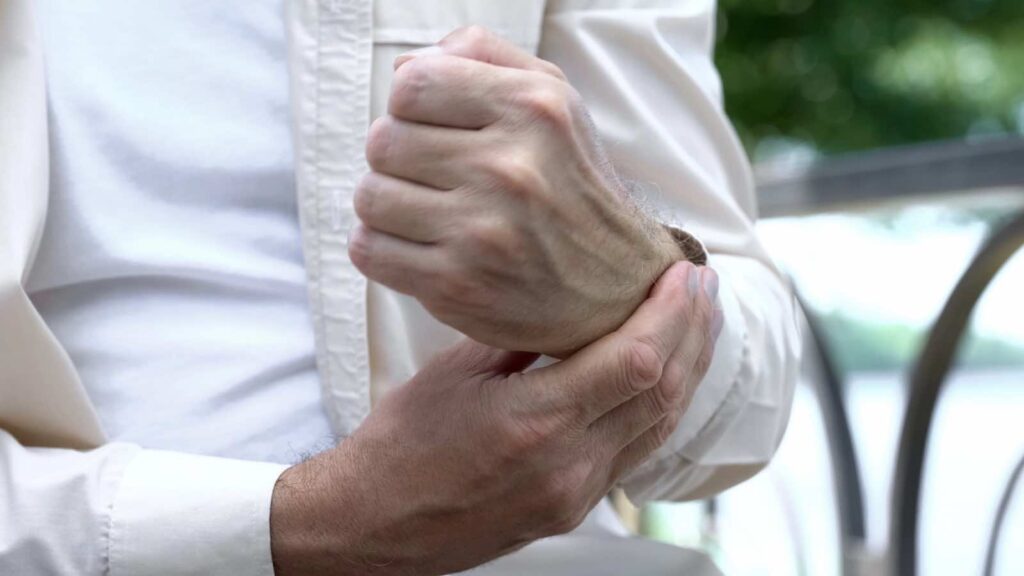
How do I get rid of golfer's elbow? To the golfer's elbow (medial epicondylitis humeri ulnarisTo heal and get rid of it sustainably is a structured, consistent and above all active therapeutic approach necessary. Simply resting the affected area is not enough; rather, targeted training must stimulate the regeneration of the damaged tendon and permanently eliminate the cause of the overload. The key to answering the question How do I get rid of golfer's elbow? lies in Eccentric training, which structurally strengthens the tendon and restores its resilience. In our specialized hand therapy practice in Frankfurt We follow a three-stage plan that will take you from pain relief to full recovery.
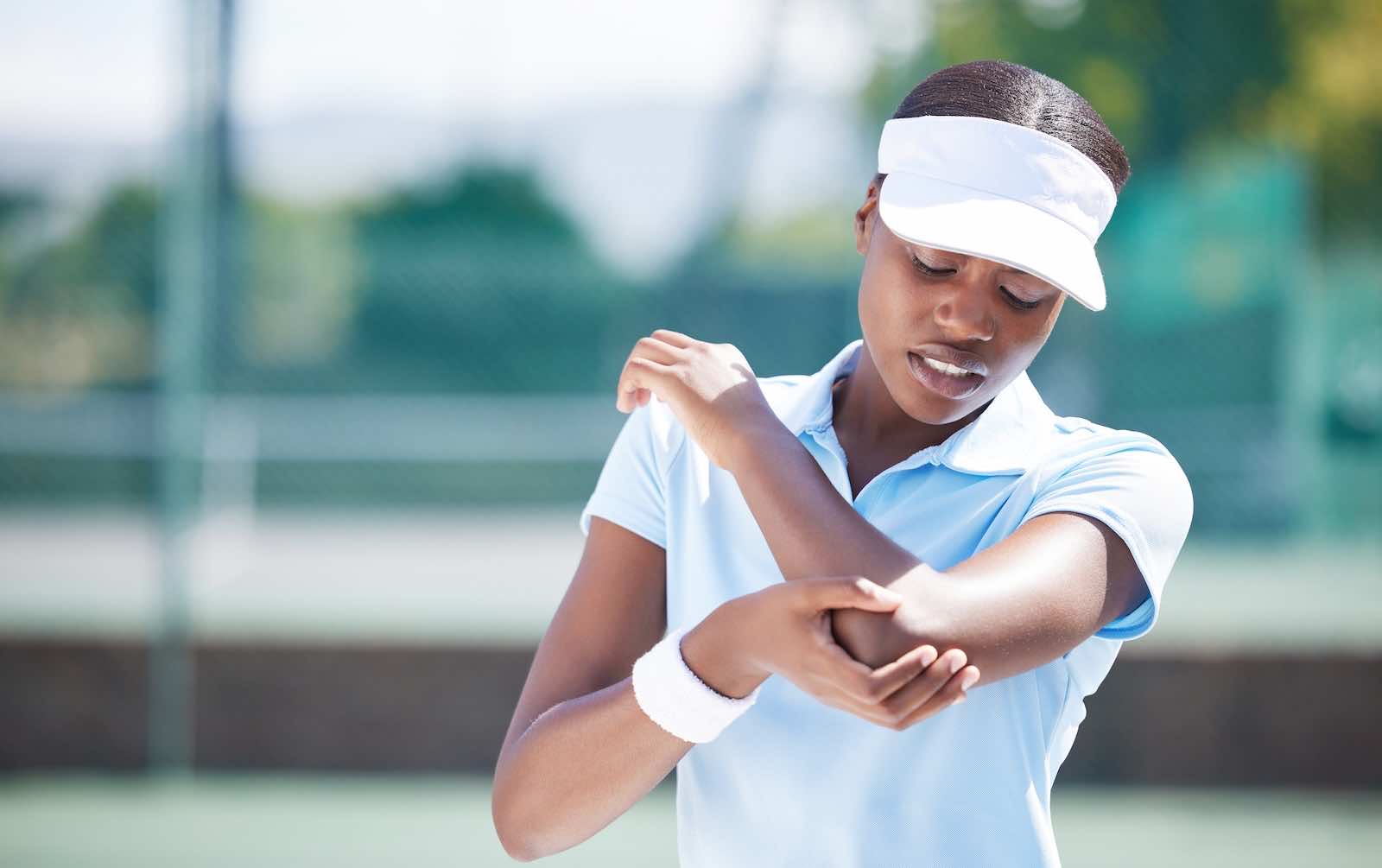
The three-stage therapy plan in Frankfurt
The path to a pain-free elbow is systematic and builds from passive relief to active strengthening.
- Step 1: Relief and pain management: Relieve acute inflammation and soothe the tendon.
- Step 2: Functional setup: Tendon regeneration through eccentric training and mobilization.
- Step 3: Prevention and ergonomics: Elimination of triggering factors in everyday life and sports.
The central role of eccentric training
The question How do I get rid of golfer's elbow? will be determined by the answer Eccentric training Dominates. Since golfer's elbow is a chronic degeneration (tendinosis), the tendon must undergo structural remodeling to regain its resilience. Eccentric training – strengthening the muscle during its extension – brings about precisely this remodeling. It stimulates collagen production and increases the tensile strength of the tissue. In Frankfurt We adjust the intensity and frequency of these exercises precisely to your pain level in order to set optimal healing stimuli without triggering renewed inflammation.
Therapeutic measures in detail
Our treatment concepts encompass a wide range of evidence-based techniques to address all aspects of the disease.
Therapeutic method | Objective |
Eccentric strength training | Structural strengthening of the flexor tendons and relapse prevention |
Manual Therapy/Cross-Friction | Release of adhesions at the tendon insertion and muscle |
Kinesiology taping | Mechanical relief of the elbow in everyday life |
Ergonomic consultation | Customization of mouse, keyboard, tools and sports equipment |
Physical measures (cold/heat) | Acute pain relief and chronic blood flow improvement |
Ergonomic analysis: Eliminating the cause
A significant part of answering the question How do I get rid of golfer's elbow? The solution lies in eliminating the underlying cause of the overuse injury. Often this is the unconscious, repetitive tension of the forearm muscles, for example when holding a computer mouse or gripping tools tightly. Frankfurt We analyze your work environment and movement patterns. We show you how to permanently reduce the strain on the healed tendon tissue with simple adjustments (e.g., a looser grip, optimized wrist position).
Frequently asked questions about the treatment of golfer's elbow (FAQ section)
1. How quickly can I get rid of golfer's elbow?
The healing process at golfer's elbow is lengthy and usually takes three to six months. Initial improvements may occur after 4–8 weeks, but complete structural healing of the tendon through eccentric training requires several months of consistent practice.
2. What is the most important thing to do to get rid of golfer's elbow quickly?
The most important thing is the Consistency in the eccentric home program. Irregular or incorrect execution of the training delays structural healing. Equally crucial is immediate... Elimination of the triggering overload (Protection and ergonomic correction).
3. Should I continue training if I'm in pain?
No. Eccentric training should be part of the Pain threshold (e.g., 4/10 on a pain scale). Severe pain (over 5/10) or pain lasting longer than 24 hours is a sign of overuse. In this case, the intensity must be reduced immediately.
4. Are medications (painkillers) a solution to get rid of golfer's elbow?
Medications (NSAIDs) relieve the symptoms, but do not cure the underlying disease. structural damage to the tendon. They only provide short-term relief during the acute pain phase. The long-term solution, How do I get rid of golfer's elbow?, is always active regeneration through therapy and training.
5. Can an epicondylitis brace contribute to healing?
The brace does not contribute to healing; it supports the healing, by reducing the tensile stress on the painful tendon insertion. It is a temporary aid to enable painful everyday activities while the actual healing takes place through training.
6. Should I take a complete break from work until my golfer's elbow is gone?
One complete break is often unrealistic and not always necessary. What is crucial is the modification To reduce strain: reducing grip strength, ergonomic adjustments, and frequent micro-breaks. Only in professions with very high, unavoidable strain is sick leave lasting several weeks advisable.
7. What should I do if golfer's elbow keeps coming back?
Recurring pain indicates that the Caused This was not resolved. This is usually due to insufficient ergonomic correction or a prematurely terminated one Strengthening program. Here is a further analysis of the swing pattern (golf) or the workplace situation (office/craft) in our practice in Frankfurt necessary.
8. Is surgery the fastest solution to get rid of golfer's elbow?
No. An operation is the last option and carries its own risks. It will only be considered if the golfer's elbow after 6–12 months of consistent conservative therapy (including training) it is still not gone.
9. What is the biggest mistake in the treatment of golfer's elbow?
The biggest mistake is that Terminating eccentric training, Once the pain subsides, the tendon is not yet fully healed. Training must continue beyond the point of pain for a full recovery.
10. Can I get rid of golfer's elbow just by stretching?
Stretching helps to reduce muscle tension, but it It does not repair the damaged tendon structure. That is the task of the eccentric training. A combination of stretching and strengthening is ideal.
 English
  German