
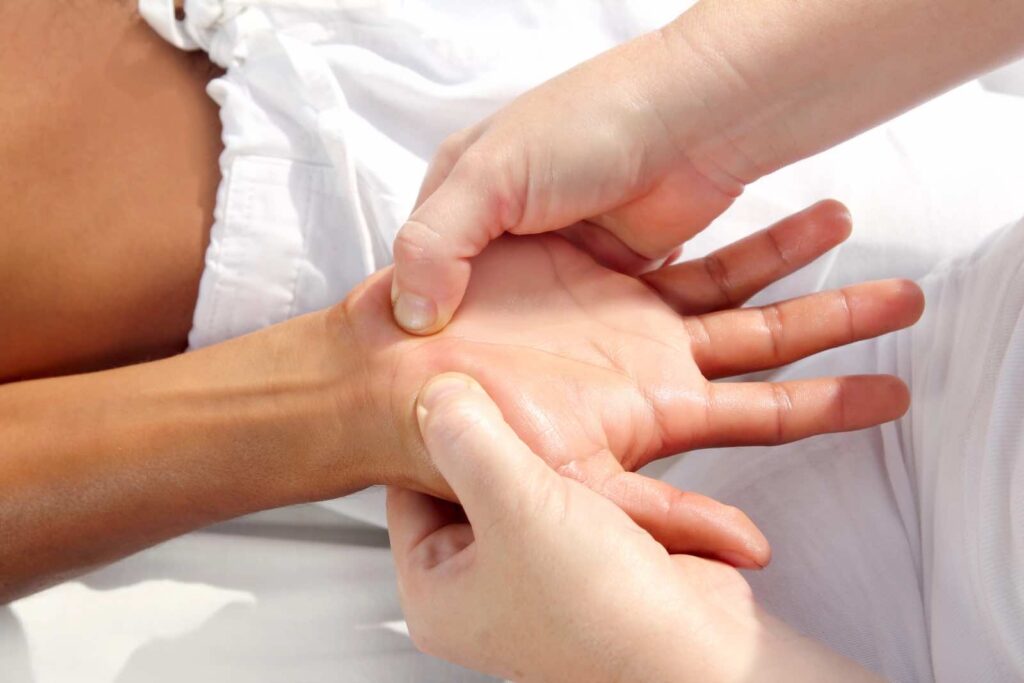
What does hand therapy involve? Hand therapy is a highly specialized field within occupational and physical therapy that focuses exclusively on the treatment of injuries, diseases, and congenital malformations of the upper extremities, particularly the hand, wrist, and forearm. Due to its complex anatomy and central role in daily life, the hand is considered one of the most challenging areas of the human body. The goal of hand therapy is to restore or optimally compensate for the hand's full functional capacity, enabling the patient to achieve the greatest possible independence in daily life, work, and sports. Treatment is based on a detailed analysis of the functional impairment and is individually tailored to the patient's specific needs and diagnosis.
The core goals of hand therapy: restoration of function and dexterity.
The therapeutic measures implemented in hand therapy are always aimed at achieving clearly defined functional goals. These goals form the basis for the therapy plan and measure the progress of rehabilitation.
- Restoration of mobility: Following injuries or surgeries, joint stiffness (contractures) and tendon adhesions often occur. Hand therapy uses mobilization techniques to restore full joint movement and smooth tendon gliding.
- Reduction of pain and swelling (edema): An early goal is to combat pain and swelling (edema), as these can severely hinder the healing process. Techniques for edema drainage and anti-inflammatory measures are used here.
- Building strength and endurance: After prolonged immobilization or injury, the muscles must be rebuilt and strengthened to make the hand resilient again.
- Training of fine motor skills and coordination: Hand therapy focuses intensively on restoring dexterity, which is essential for complex tasks (writing, buttoning buttons).
- Scar management: Scars can severely restrict mobility by adhering to deeper structures (tendons, capsules). Targeted scar treatment is a key component of hand therapy.
What do you do in hand therapy? The diagnostic and findings-oriented approach.
Before the actual treatment can begin, a comprehensive diagnostic and assessment process is necessary, which makes up a large part of the process., what one does in hand therapy. The therapist creates a functional diagnosis that goes beyond the medical diagnosis.
The initial assessment
- Medical history: Detailed discussion about the injury history, the degree of limitation in everyday life, work and sports, as well as the pain characteristics.
- Measurement of range of motion (ROM): Measurement of the active and passive mobility of all joints (fingers, wrist, forearm) using a goniometer.
- Force measurement (dynamometry): Measurement of grip strength (hand strength) and pinch strength (point and key grip) using special devices.
- Sensitivity testing: Nerve function is assessed by testing sensitivity (feeling) with monofilaments or two-point discrimination tests.
- Edema and scar assessment: Documentation of swelling (measurement of circumference) and assessment of scar quality (elasticity, adhesion).
The results of these tests define and specify which therapeutic measures have priority., what is used in hand therapy for this specific patient might.
What happens in hand therapy? Specialized treatment techniques.
The core of hand therapy lies in a combination of passive techniques performed by the therapist and active exercises performed independently by the patient.
Manual therapy and joint mobilization
These are passive techniques where the therapist uses their hands to improve joint mechanics.
- Joint mobilization: Specific manual techniques to increase the mobility of the joint capsule (the so-called "joint play"). This is essential after prolonged immobilization.
- Traction and gliding techniques: Gentle pulling and pushing movements in the joints, often used to relieve pain and improve joint nutrition.
- Soft tissue techniques: Deep treatments of muscles, fascia and connective tissue to release tension in the forearm that negatively affects hand function.
Scar management and edema reduction
An important part of this, what one does in hand therapy, is the treatment of soft tissues, especially after surgery or burns.
- Scar massage and mobilization: Through targeted pressure and stretching, the scar is softened and the adhesion to deeper structures (tendons, nerves) is released in order to restore the gliding ability of the tendons.
- Compression therapy: Application of compression bandages or gloves to reduce swelling (edema) and positively influence scar maturation.
- Lymph drainage: Manual techniques for decongesting the hand and forearm to remove excess fluid.
Rail construction (orthopedic supply)
In many cases, an adapted immobilization or functional guidance is necessary, which is created in hand therapy itself.
- Static rails: Serving the Immobilization of the joint in a relieving position (e.g. night splint for carpal tunnel syndrome or positioning splint after fractures).
- Dynamic or semi-dynamic rails: Serving the targeted mobilization. They allow movement in one direction while limiting movement in the other direction or exerting a corrective pulling force (spring tension).
- Individual customization: The splints are individually adapted from thermoplastic material and are regularly modified during the course of therapy.
Defined space for an image: [Image of a hand therapist fitting a thermoplastic splint to the patient, checking the correct position of the wrist.]
What do you do in hand therapy? Training of strength, coordination, and everyday skills.
The active part of hand therapy is crucial to converting regained mobility into functional strength and dexterity.
Functional strength and coordination training
The training is structured gradually to prepare the hand for the stresses of everyday life.
Training goal | Description of exercises in hand therapy |
Strength building (gross strength) | Use of therapy putty, handballs, dumbbells and spring trainers to increase grip strength and holding ability. |
Coordination (fine motor skills) | Exercises with small objects (pins, coins, beads), peg games or special therapy devices to improve finger dexterity. |
Proprioception and stability | Stress on the hand on unstable surfaces (wobble boards, therapy gyroscopes) or through support exercises to reflexively stabilize the joint (important after ligament injuries). |
Endurance | Long-term training to increase muscular fatigue resistance, important for professional activities. |
Everyday life skills training (ADL training)
The primary goal of hand therapy is reintegration into daily life (Activities of Daily Living, ADL). The therapist trains patients in specific everyday situations.
- Self-sufficiency: Dressing (buttons, zippers), eating (using cutlery), personal hygiene.
- Household: Opening jars and bottles, handling tools, lifting and carrying objects.
- Job-specific training: Simulation of movements and loads necessary in the workplace.
The role of hand therapy in specific diagnoses
The therapeutic focus areas, what one does in hand therapy, vary depending on the clinical picture and the time of treatment (early postoperative vs. chronic).
For tendon injuries and reconstructions
Hand therapy is essential after tendon repair. Often, a very tight, dynamic post-treatment scheme (e.g., according to Kleinert or Duran) is used, in which the hand must be moved carefully to prevent adhesions of the tendon within the tendon sheath. The aim here is to find the balance between healing and gliding. Therapists are specially trained to supervise and perform these delicate exercises.
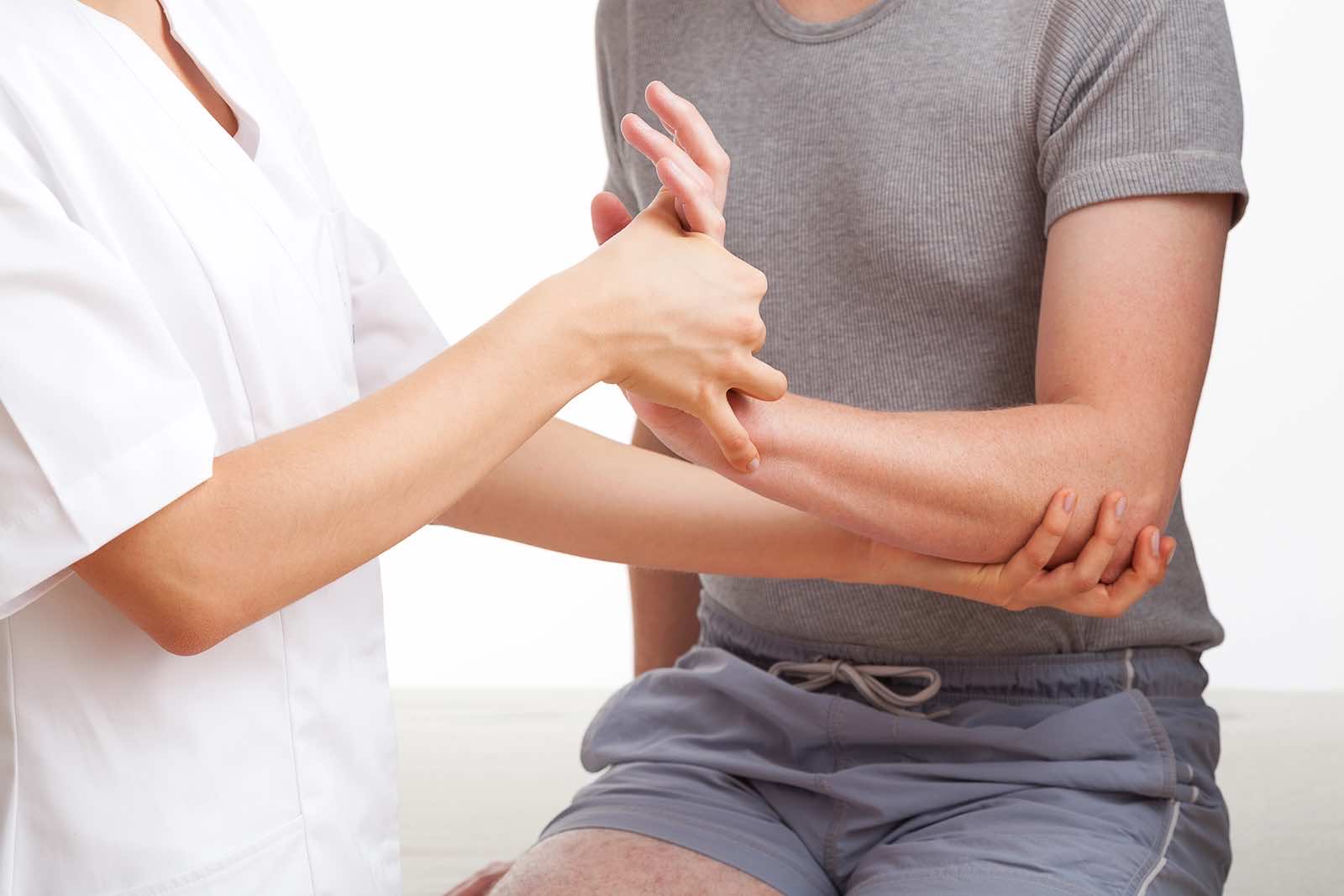
In nerve compression syndromes
Following surgery to relieve pressure on a nerve (e.g., carpal tunnel surgery), hand therapy primarily includes:
- Scar mobilization: To prevent the nerve from becoming stuck in the scar.
- Neurodynamic exercises: Targeted exercises to improve the nerve's ability to glide in the canal.
- Sensitivity training: Restoration of function and sensation in the numb area.
For osteoarthritis and rheumatism
In degenerative or inflammatory joint diseases, the focus is on relieving pain and maintaining joint function without overloading the joint. Man in hand therapy Here, the treatment often involves the use of aids to relieve joint stress, heat applications, and joint-friendly exercise training.
Frequently asked questions about hand therapy
1. Is hand therapy the same as physiotherapy or occupational therapy?
Hand therapy is a specialization Within occupational therapy and/or physiotherapy, focusing on the upper extremity, therapists have specialized additional training that provides in-depth knowledge of the complex anatomy and specific treatment approaches for hand injuries. Physiotherapists or occupational therapists without this specialization often cannot apply the comprehensive techniques used in hand therapy with this level of detail.
2. What exactly is manual therapy in hand therapy?
Manual therapy in hand therapy refers to specific techniques in which the therapist uses their hands to passively mobilize joints and soft tissues. The joint surfaces are gently moved in their physiological direction to stretch the capsule and improve joint play, thus restoring hand mobility. These passive techniques are often necessary before the patient can actively and painlessly exercise, which is an important step in hand therapy.
3. What is the difference between active and passive mobilization used in hand therapy?
At the passive mobilization The therapist moves the patient's joint without the patient tensing their muscles. This serves to increase the range of motion. During the active mobilization The patient moves the joint themselves through muscle tension, often under the guidance of the therapist. Both forms of mobilization are crucial elements of this process., what one does in hand therapy, and are used sequentially or in combination depending on the healing phase and diagnosis.
4. How long does a typical hand therapy session last?
A typical hand therapy session usually lasts between 30 and 60 minutes, The frequency of sessions varies considerably depending on the doctor's prescription and the complexity of the treatment. For recent tendon injuries, up to five sessions per week may be required in hand therapy, while for chronic problems, one or two sessions per week are often sufficient. The overall duration of the therapy depends on the severity of the condition.
5. When should I start hand therapy after hand surgery?
The start of hand therapy depends on the type of surgery, but often takes place as early as possible, sometimes even on the first day After surgery (e.g., for edema control). Following tendon reconstruction, a very early start to hand therapy according to strict protocols is crucial to prevent adhesions and ensure the success of the operation. Your hand surgeon will determine the exact time.
6. What is done in hand therapy for carpal tunnel syndrome?
In conservative treatment of carpal tunnel syndrome, hand therapy involves... Night rails to relieve, Neurodynamic exercises to improve nerve gliding and Soft tissue techniques to relax the forearm muscles. After surgery, the focus is on the Scar treatment and the rapid restoration of full strength and mobility, which is rebuilt in hand therapy through targeted training.
7. What is the purpose of splint construction used in hand therapy?
Orthotic splints (orthotics) are used to support operated or injured structures. protect (Immobilization), to the joints correct or the movement in a specific direction lead. The custom-made splints are precisely tailored to the patient's anatomy and help achieve the healing goals. Correct splint fabrication is a key, specialized service offered in hand therapy.
8. Can hand therapy also help with chronic pain?
Yes, hand therapy can be very helpful for chronic pain, even without an acute injury. In such cases, hand therapy focuses on understanding the pain mechanism, treating trigger points, and providing training. joint-friendly behavior and the training of Compensation strategies. The goal is to increase resilience and reduce pain sensitivity in everyday life.
9. How can I independently support at home what is done in hand therapy?
The success of hand therapy depends significantly on your independent collaboration ab. You must do the exercises you learned from the therapist. regularly and with discipline The treatment should be carried out at home. This includes wearing the prescribed splints as planned and consistently performing the movement, strengthening, and scar exercises. High adherence to the therapy accelerates the restoration of function and is key to successful rehabilitation.
10. What is done in hand therapy to soften the scars?
In hand therapy, special techniques are used to make scars soft and elastic. Scar mobilization techniques This involves massaging, stretching, and applying deep pressure to the scar to prevent or loosen adhesions between the scar tissue and deeper tendons and capsules. Silicone dressings or compression therapy are often used as a supplement to optimize scar maturation and improve aesthetics.

 English
  German