
How long does it take for a surgical scar to heal? This is a question every patient asks after surgery, as the healing process significantly impacts both the return to daily life and the success of the operation. The duration of scar healing is a highly individual process that depends on various factors such as the type of surgery, the location of the scar (e.g., on the hand), and your overall health. Although the superficial wound usually closes within a few weeks, the complete maturation of the scar tissue takes considerably longer. We would like to provide you with a detailed overview of the phases of healing and the therapeutic options available. Frankfurt to optimize this process.
The three phases of scar healing and their duration
The healing process of a surgical scar is a biological continuum that is divided into three main phases. The answer to the question, How long does it take for a surgical scar to heal?, depends on which of these phases is being considered.
Healing phase | Timeframe (approximate) | Characteristics and therapeutic relevance |
1. Inflammatory phase | Days 1 to 5 | The wound is red, swollen, and painful. This is where primary wound cleansing begins. Therapeutic measures are passive (immobilization, edema control). |
2. Proliferation phase | Day 5 to week 3 | Formation of new tissue (granulation tissue). The wound closes. Active scar treatment begins as soon as the stitches are removed. |
3. Maturation phase (remodeling) | 3rd week up to 12–24 months | The scar tissue is remodeled, collagen fibers realign themselves. The scar becomes flatter and paler. Intensive therapy and pressure treatment are crucial. |
Visible wound healing, meaning the closure of the wound, is usually complete after about 10 to 14 days. functional healing However, restoring the original tissue quality and resilience can take up to two years.
Factors influencing the healing time
The duration and quality of scar healing are influenced by numerous factors. Understanding these factors is essential to know..., How long does it take for a surgical scar to heal? and how to shorten this time.
- Localization: Scars on joints (such as on the hand) or under high tension (e.g. on the back) often take longer to heal and are more prone to excessive scar formation.
- Wound infections: An infection can massively delay healing and negatively affect scar quality.
- Patient factors: Age (in children scars heal faster, but tend to form raised scars), nutritional status (lack of vitamin C or zinc), smoking and chronic diseases (e.g. diabetes) slow down healing.
- Therapeutic intervention: Early, specialized occupational therapy in Frankfurt Reducing edema and mobilizing tissue can optimize healing time and improve functional outcomes.
Specialized scar therapy to optimize healing
To accelerate and improve functional maturation, consistent management is essential in the Maturation phase essential. This is where the expertise of hand therapy comes in.
1. Edema control in the early phase
Persistent swelling (edema) prolongs healing and increases the risk of hardening. Techniques of Manual lymphatic drainage The application of compression garments helps control fluid accumulation. This is an important step to ensure a quick and uncomplicated recovery.
2. Manual Mobilization
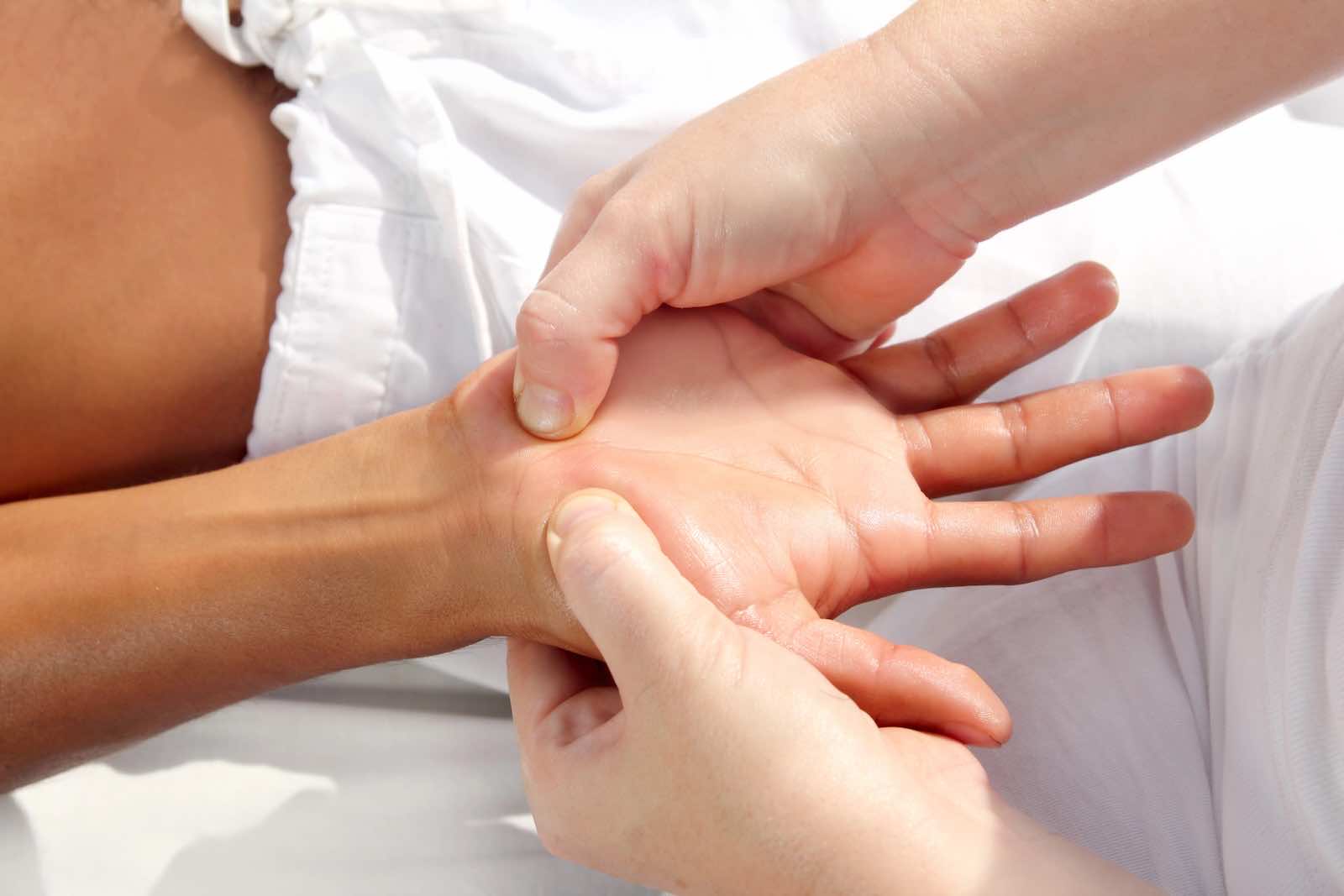
Once the scar is stable, we will begin with targeted treatment. Scar mobilization. These manual techniques help to release adhesions between the scar and the underlying structures (e.g., tendons in the hand).
- Goal: Restoration of Tendon gliding ability, which is crucial for the full function of the hand.
- Duration: This mobilization is often necessary for months in order to maintain permanently flexible tissue.
The role of pressure therapy and the home program
The key to shortening the functional healing time and improving scar quality lies in the continuous application of pressure and care by the patient themselves.
Pressure therapy (silicone and compression)
Constant pressure on the scar is the most effective method to prevent or reduce hypertrophic scarring (raised scar formation). The pressure ensures that the collagen fibers align more neatly.
Aids | Recommended application for optimizing healing |
silicone products | Apply for 12–24 hours daily; keeps the scar moist and applies gentle pressure. |
Compression gloves | Used for large scars or persistent edema; recommended wearing time for many months. |
Targeted rails | Application of pressure to local, raised areas; support of joint positions. |
These aids should be worn consistently for most of the maturation phase.
Active home program
The home exercise program that you will receive in our practice Frankfurt The information conveyed is a crucial factor., How long does it take for a surgical scar to heal?. Daily, targeted massages and stretches will keep the scar supple and prevent it from hardening or sticking together again.
Frequently asked questions about the healing time of surgical scars
1. Is a scar completely healed after 6 weeks?
No, after 6 weeks the scar is usually firmly closed and has reached about 80% of its final tensile strength, but it is far from fully mature. After 6 weeks, the scar is in the transition phase from proliferation to the long maturation phase. In this phase, it is still active, often reddened, and responds very well to targeted treatment such as scar mobilization. Frankfurt, in order to optimize the final quality.
2. How long do I need to protect the scar from the sun?
The scar should be consistently protected from direct sunlight for at least 12 months. This is important because scar tissue is particularly sensitive to UV light, and otherwise permanent dark discoloration (hyperpigmentation) can occur. Even after the first 12 months, a high sun protection factor should be used to optimally support scar healing.
3. What delays the healing of a surgical scar the most?
The most common factors delaying healing are wound infections, persistent swelling (edema), chronic diseases (such as diabetes), and, above all, mechanical overuse of the wound. If a scar is constantly under tension or stretched, the body can produce excessive collagen, leading to hypertrophic scarring and prolonging the healing process.
4. When should I start active scar massage?
Active scar massage should begin as soon as the wound is stably closed, the sutures have been removed, and there are no more open or weeping areas – typically 10 to 14 days post-surgery. Starting early is crucial to prevent the scar tissue from adhering to deeper structures in the hand and to ensure the tendons can glide smoothly.
5. How long does the treatment of hypertrophic scars take?
The treatment of hypertrophic scars can be very lengthy and often requires six to twelve months of intensive therapy. It usually involves the consistent application of pressure therapy (silicone, compression gloves) in combination with targeted manual mobilization at our practice in [location]. Frankfurt. Without this continuous treatment, the regression of the lumpy tissue is unnecessarily prolonged.
6. What does it mean if the scar still itches after months?
Mild itching or tightness is normal during the active remodeling phase, as the tissue is remodeling and new nerve fibers are growing in. However, if the itching persists intensely, this can be a sign of excessive scar formation or mild tissue hypersensitivity. In these cases, moisturizing creams and targeted therapeutic desensitization can help.
7. Can I shorten the healing time through physiotherapy or occupational therapy?
Yes, specialized therapy, especially occupational therapy for hand scars, can significantly shorten the functional healing time. Early edema control, targeted manual mobilization, and an individualized functional training program actively manage tissue quality. The answer to the question, How long does it take for a surgical scar to heal?, is accompanied by professional guidance in Frankfurt positively influenced.
8. Is the scar on the hand really gone after a year?
In most cases, the scar will have faded and become flatter after a year, but the internal collagen structure can continue to mature. The tissue often only reaches its full strength and elasticity after 18 to 24 months. Therapeutic support is advisable during this period to ensure that no functional limitations arise due to scar adhesions.
9. What to do if the scar on your hand hurts or tingles?
Pain or tingling can indicate irritation or compression of small skin nerves (neuromia) in scar tissue. This requires specific treatment methods such as desensitization and targeted soft tissue techniques to relieve nerve pressure. An immediate therapeutic examination is necessary. Frankfurt is advisable in order to clarify the cause.
10. Do scar ointments and gels really accelerate healing?
Scar ointments and gels play a supportive role. They keep the scar tissue supple and moist, which promotes healing. Silicone-based products also have the advantage of applying gentle pressure and fostering a moist environment. However, they do not replace manual mobilization and functional therapy, but they are an important component of a home care program.
Optimal support for a speedy recovery
The time, How long does it take for a surgical scar to heal?, is an active process that you and your therapist will undertake in Frankfurt can significantly influence the outcome. Early, specialized, and consistent treatment can optimally restore the function of your hand and minimize the aesthetic and functional impairments of the scar. Trust in the expertise of specialized hand therapy for your best possible recovery.

 English
  German